
Mumbai (AsiaNews) – A new Indian film entitled “Batwara 1947” seeks to address the historical wound of the partition from Pakistan with a perspective that – drawing on the suffering of refugees – aims to foster unity rather than division.
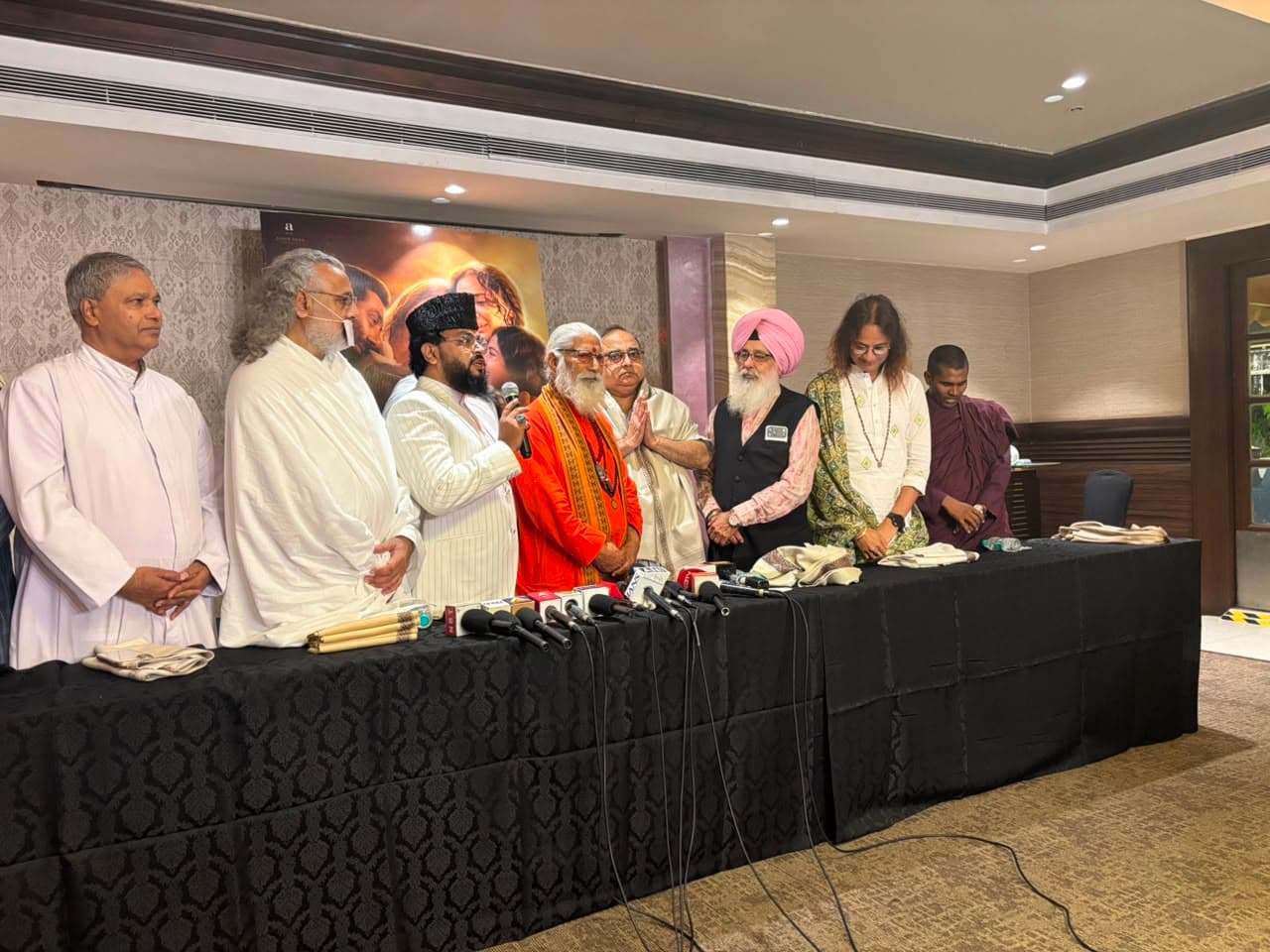
A special screening dedicated in particular to interfaith leaders was held on 20 August at First Look, Santa Cruz, Mumbai. The initiative was organised by the film’s director, Rajkumar Santoshi, with the aim of bringing together leaders and representatives of different faith traditions and highlighting the film’s powerful message of communal harmony, love, peace and unity.
“Batwara 1947” tells the story of Sikander Mirza, a Muslim, who flees Meerut with his wife Hameeda and their children Javed and Tanvir, moving to Lahore. After a period in a refugee camp, the family is given a large haveli abandoned by its Hindu owners.
However, Mai, an elderly Hindu woman who claims the ancestral property, is still living in the house. This unexpected encounter triggers mounting tensions and complex emotional conflicts, as the characters navigate their transformed reality against the backdrop of one of the most turbulent chapters in the history of the Indian subcontinent.
The film has been deeply appreciated for its beautiful, moving and heartfelt story. It conveys the message that love and humanity can build bridges across religious and social boundaries, and that peace and harmony must rise above differences in faith.
The event was attended by representatives from the Hindu, Christian, Sikh, Muslim and Buddhist communities. Among those present were Mufti Ziyaee Hazarat, Goswami Sushil Ji Maharaj, Vivek Muni, Devendra Mani, Paramjit Singh Chandhok, Purna Bhante and the Divine Word Missionary Fr Norbert, representing the Catholic Bishops’ Conference of India (CBCI).
Those present emphasised that “Batwara 1947” tells a story of love that transcends religious boundaries. They noted that the message is particularly relevant for India, where the values of mutual respect, understanding and peaceful coexistence are essential for building a united society.
The religious leaders expressed the hope that the film would reach a wide audience and help raise awareness of the importance of communal harmony and national unity.
The film – produced by Aamir Khan – stars prominent actors such as Sunny Deol, Preity Zinta and Shabana Azmi, whose performances have been praised for effectively conveying the themes of love, humanity and inner peace. Javed Akhtar’s lyrics and A. R. Rahman’s music have also been praised for their emotional depth and for enhancing the film’s message.
“The Catholic Church,” said Fr Norbert Herman to AsiaNews, commenting on the film, “promotes interreligious dialogue because it recognises that elements of truth and goodness can also be found in other religious traditions. It also calls for dialogue and collaboration in promoting moral, cultural and spiritual values for the common good. This film seeks to reflect these same principles by highlighting the values of unity, justice, mutual respect and peaceful coexistence amongst people of different faiths in India. It aims to celebrate our common humanity and to encourage greater understanding and harmony amongst the diverse faces of our society.”